
How to Check Criminal History in Elk Horn
Elk Horn does not operate a separate police records portal, municipal court, local jail roster, or city criminal-history database. Use the official county channel tied to each stage. The Sheriff holds incident and arrest material, jail staff confirm custody, the clerk holds filed cases, and Iowa DCI produces the statewide repository response.
- Call or visit the Shelby County Sheriff for an Elk Horn incident or arrest report and describe the event precisely.
- Check Recent Arrests SCSO 2.0 for new postings, then confirm custody with the county jail at Option 2.
- Search Iowa Courts Online for the formal charge, case events, financial entries, and disposition.
- Ask the Shelby County clerk for certified, archived, pre-1998, or terminal-only court material.
- Request an Iowa DCI name check when a statewide fingerprint-supported history is required.
Use the Shelby County record overview for more detail on DCI disclosure limits and countywide court access.
Elk Horn Police Records Come From the Sheriff
The Shelby County Sheriff explicitly lists Elk Horn among the incorporated cities receiving contract law enforcement. Deputies patrol city streets and county roads, respond to calls, investigate crimes and crashes, and enforce traffic laws. No separate Elk Horn Police Department, city arrest log, local report form, or police records unit was found in the official sources.
That finding gives Elk Horn residents a clear starting point: the Sheriff’s Office at 1104 9th Street in Harlan, telephone 712-755-5026. Public counter hours are 8:00 a.m. to 4:00 p.m., while field patrol operates around the clock. Identify the incident date, approximate time, exact location, responding agency, parties, and report number if known. Ask which portions can be inspected or copied and what the current cost will be.
The Elk Horn Police Department
Because there is no city police records desk, a request must go to the county office that created the record. Call the Sheriff, visit the counter, or send a focused written chapter 22 request. No official local form, general records email, fixed copy fee, or promised turnaround is posted. The absence of a web form does not mean the report does not exist.
Ask for the precise item that fits the need. An initial incident fact sheet, full narrative, CAD log, 911 audio, body-camera video, arrest report, and jail booking are different records. Investigative material and juvenile, victim, medical, identifying, or safety-sensitive details may be withheld or redacted. A city administrative record remains with Elk Horn, while a deputy’s report remains with the Sheriff.
When Elk Horn City Hall Can Help
Elk Horn City Hall can help with city administration, ordinances, notices, and other municipal documents. Official directory material lists P.O. Box 216, Elk Horn, Iowa 51531, telephone 712-764-5514, fax 712-764-5515, and office hours Monday, Tuesday, and Thursday from 8:00 a.m. to 4:00 p.m. It is not the custodian of the Sheriff’s investigative file or the District Court’s criminal docket.
The official State Library-supported Elk Horn contact page supplies local community context.
Use that local contact layer for city questions, then move to the Sheriff or clerk when the requested record concerns a police response or prosecution.
Arrests and Bookings in Elk Horn
County deputies route Elk Horn arrests into the Shelby County Jail system in Harlan. The jail is connected to the Sheriff’s Office at 1104 9th Street and has 14 beds. Certified staff monitor it 24 hours a day. Call 712-755-5026, Option 2, to confirm current custody. The Sheriff’s Recent Arrests SCSO 2.0 display can supply a recent lead, but it does not establish conviction or continued detention.
The live display is not an Elk Horn crime dashboard. Its embedded controls can change, and no stable city filter or full field list was confirmed in the static official page. Use what the live display actually shows. Then request the report from the Sheriff and find the filed charge through Iowa Courts Online. If the posting has rolled off, a focused records request and clerk search are the fallback.
How an Elk Horn Arrest Reaches Harlan
An Elk Horn call begins with a county deputy’s response. If an arrest occurs, the deputy creates an arrest record and transports the person to the county jail. Jail staff create booking and custody records. The prosecutor later decides whether and what to file. The Clerk of District Court opens the court case, and a reported disposition can later update Iowa DCI.
Elk Horn arrest chain: deputy response › Sheriff report › Harlan jail booking › charging decision › Iowa District Court case › DCI disposition update.
Every stage can differ. An initial arrest allegation may be amended or dismissed. A report can survive when no case is filed. A DCI response may omit an older arrest without final disposition when no signed release is provided. Read dates and dispositions before drawing a conclusion.
Elk Horn Municipal Court Records
Elk Horn has no modern municipal court. Iowa abolished municipal courts, police courts, mayors’ courts, and other lower trial courts when its unified District Court system took effect July 1, 1973. City citations, ordinance prosecutions, misdemeanors, and felonies now use Iowa District Court. The Shelby County Clerk at 612 Court Street in Harlan maintains local filed cases.
| Court Name | Iowa District Court for Shelby County |
|---|---|
| Case Types Heard | Elk Horn ordinance matters, citations, misdemeanors, felonies, OWI, and related proceedings |
| Case Lookup Channel | Iowa Courts Online or the clerk at 712-755-5543 |
| What the Docket Shows | Case ID, parties, charge and disposition, filings, bond, and public financial details |
| Copies & Fees | Confirm current certified-copy and archive charges with the clerk |
Public trial cases after 1998 are generally online, and some earlier cases appear. The courthouse public terminal provides access to public electronic trial documents that may not be downloadable from home.
When an Elk Horn Report Has No Case
A deputy can document a call, complaint, crash, or investigation without an arrest. Even after an arrest, prosecutors may decide not to file a criminal charge. That means a Sheriff record can exist while Iowa Courts Online shows no matching case. It does not prove the report vanished, nor does the report alone prove that a crime or conviction occurred.
| Elk Horn record | What it proves | What it cannot prove |
|---|---|---|
| Incident report | Deputies documented a response | That a charge or conviction followed |
| Booking record | Custody intake occurred | The final court outcome |
| Court disposition | How the filed case ended | Every detail in the police narrative |
Ask the Sheriff for the originating material and the clerk for any later case. Keep the records separate even when they describe the same event.
Where Elk Horn Records End Up
The Sheriff holds Elk Horn deputy reports and local jail records. Iowa District Court holds filed cases and judgments. The Iowa Department of Public Safety, Division of Criminal Investigation, keeps the statewide fingerprint-supported criminal-history repository. A DCI rap sheet is a cycle-based state compilation, not a scanned Sheriff narrative or complete court docket.
Record flow: Shelby County Sheriff serving Elk Horn › Shelby County Jail › Iowa District Court › Iowa DCI.
Begin at the front of the chain for a recent event and at the court for its outcome. A person reviewing their own record should compare court and DCI information and challenge a discrepancy with the office that controls it.
Elk Horn Crime Numbers Need Context
Elk Horn had 601 residents in the 2020 Census. No recent official Elk Horn-only offense table was found. A live arrest feed cannot be divided by that population to manufacture a city crime rate. Arrests are not the same as reported offenses, unique people, filed cases, or convictions, and contract policing makes countywide reporting hard to allocate to one small city.
The official Shelby County profile provides county setting and government history.

Use FBI or state crime data only at the exact agency, year, and geography the official source reports.
Elk Horn Identity and Public Records
Elk Horn’s Danish-American identity is meaningful local context, but it has no evidentiary role in crime claims. Cultural sites, city records, and community history should not be blended with arrest statistics. The useful records fact is institutional: a place with its own municipal identity still receives police service from a county agency and sends criminal cases to a unified state trial court.
The county’s elected-official directory identifies the public county offices responsible for local government.

That division of roles helps a requester avoid sending a police-record request to a cultural institution or city office that never held it.
Elk Horn Custody Services and Records
Once an Elk Horn arrest reaches the county jail, separate services govern mail and communications. They help people maintain contact with someone in custody, but they do not reveal the filed charge or final disposition. The official jail correspondence page states rules for inmate mail, while Reliance Telephone supports phone, text, and video communication.
The Sheriff’s correspondence page describes the county jail’s mail rules.
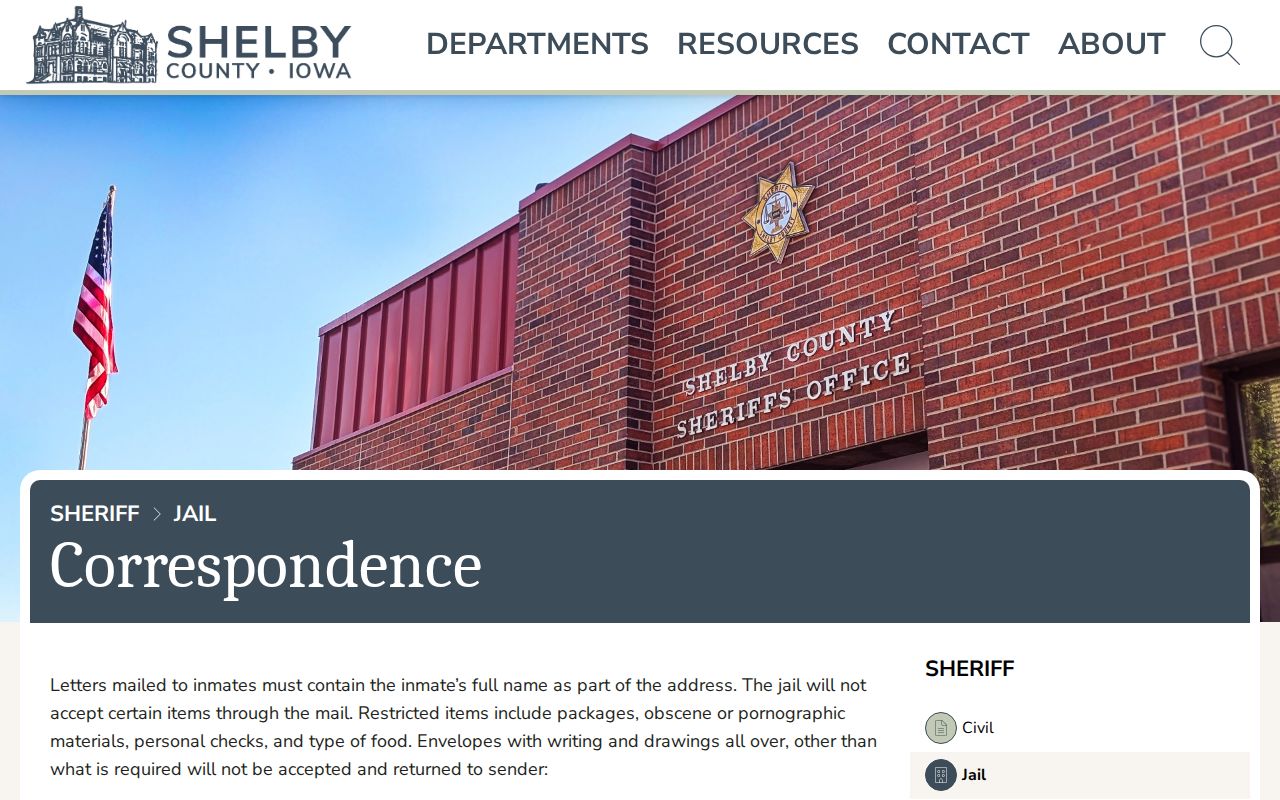
Mail rules belong to custody administration, not to the public criminal-case search.
The official jail communications page explains telephone, video, and texting services.
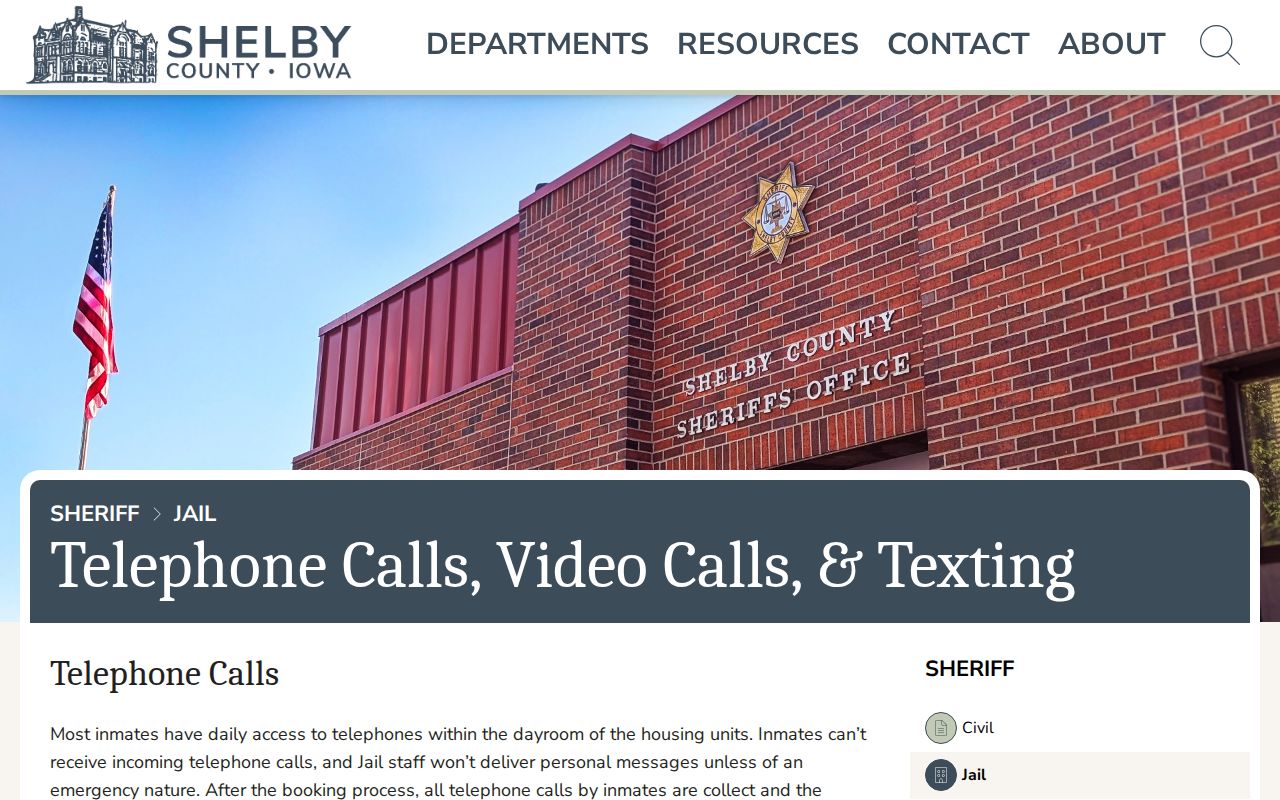
For case status, return to Iowa Courts Online or the clerk rather than relying on a jail service account.
Public Access Rules
Iowa Open Records Law governs access to public agency records, but it works alongside confidentiality statutes. Peace-officer investigative reports may be protected even when certain immediate facts are available. Chapter 692 controls criminal-history release and the subject’s right to review and challenge repository data. Most juvenile information remains confidential. Ask for a precise Elk Horn record and expect the custodian to review it for lawful redactions.
Key Statutes:
Iowa Open Records Law, chapter 22 provides the request framework, subject to listed and specific-law exceptions.
Iowa Code chapter 692 defines criminal-history data and controls disclosure, challenges, and unlawful handling.
Iowa Code chapter 232 protects most juvenile justice records from ordinary public access.
No local Elk Horn report fee or fixed turnaround appears in the official research. Confirm cost, format, and delivery with the Sheriff before requesting a copy.
A DCI response follows different rules from an Elk Horn incident request. Without signed authorization, DCI withholds a discharged deferred judgment and certain arrests older than 18 months with no final disposition. Its “no history found” language can also cover nonreleasable or confidential juvenile material. Check the Iowa District Court disposition when the statewide result and local record do not match.